
Do historical struggle songs constitute hate speech?
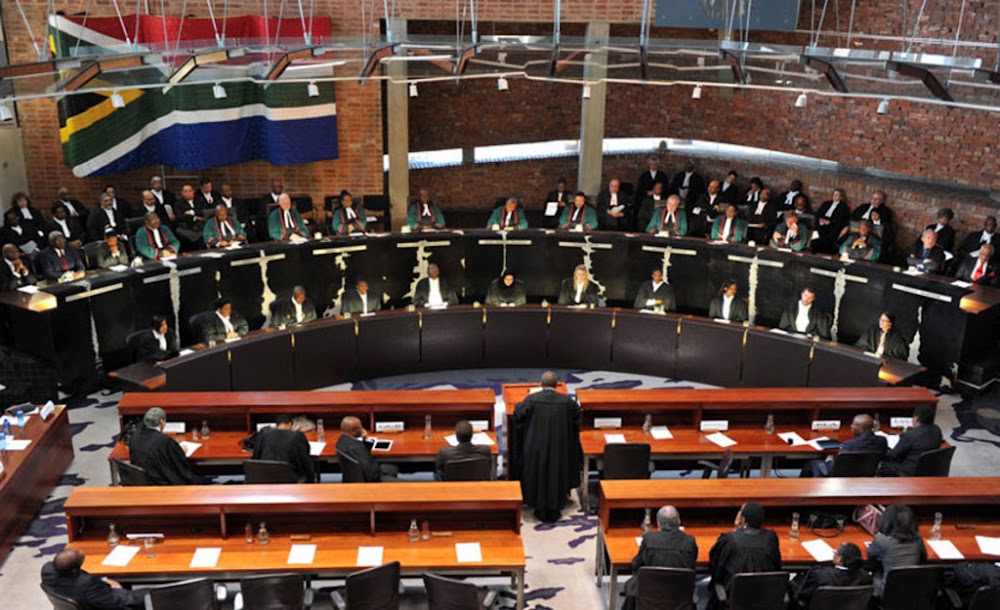
On Thursday (27 March 2025), the Constitutional Court of South Africa dismissed an application by AfriForum for leave to appeal a judgment against it by the Supreme Court of Appeals (SCA). The Apex Court held that the appeal had no reasonable prospects of success. This appears to mark the end of the road, at least within the country’s justice system, for AfriForum’s pursuit of having the struggle song “Kill the Boer” declared as hate speech. Before delving into this matter, it would be prudent of me to introduce the parties involved and provide a brief history of the dispute.
Parties and Background
AfriForum is a South African non-governmental organisation (NGO) that primarily focuses on the interests of Afrikaners, a subgroup of the country’s white population. According to its website, by promoting self-dependence and enhancing self-governance within Afrikaner communities, AfriForum seeks to empower these groups while safeguarding their identity, culture, history, and the Afrikaans language. The organisation is, in their words, committed to ensuring the continued existence of the Afrikaner community.
In contrast, the Economic Freedom Fighters (EFF), led by Julius Malema (“Malema”), is a political party that describes itself as a radical and militant economic emancipation movement. The EFF draws inspiration from Marxist–Leninist thought in its analysis of the state, imperialism, culture, and class contradictions. Its motto and rallying call to its supporters is “economic freedom in our lifetime.” As such, the EFF, inter alia, seeks land expropriation without compensation for redistribution, nationalisation of key sectors, strengthened state capacity to end tenders, free quality education, healthcare, housing, and sanitation, alongside protected industrial development and minimum wages to reduce inequality.
Round 1: AfriForum v Malema [2011] 4 All SA 293 (EqC)
The dispute dates back to 2010, when AfriForum initiated proceedings against Malema and the African National Congress (ANC) in the Equality Court over the singing of the infamous song “Dubula Ibhunu” (Shoot the Boer). At that time, Malema was a member of the ANC prior to his expulsion. The Equality Court found in AfriForum’s favour, holding that the words Dubula Ibhunu” constituted hate speech on the occasions that Malema performed them.
Notably, this decision was rendered before the Constitutional Court’s ruling in Qwelane v South African Human Rights Commission.1 Consequently, the hate speech determination was made under the “old” section 10(1) of the Promotion of Equality and Prevention of Unfair Discrimination Act 4 of 2000 (“PEPUDA”), which employed “hurtful” as the standard. This judgment was rendered non-binding after Qwelane invalidated the “hurtful” criterion.
Subsequently, Malema and the ANC appealed to the SCA, which referred the matter to mediation. Through mediation, the parties agreed to respect all communities’ rights to celebrate and protect their cultural heritage. They acknowledged that certain struggle song lyrics might hurt minority communities and committed to exercising restraint to avoid conflict, while recognising the historical context of these songs. Moreover, the ANC, Malema, AfriForum, and TAU-SA agreed to continue formal dialogue, with the ANC and Malema withdrawing their appeal to the SCA at no cost. This agreement was confirmed as an order of the Court by the SCA.
Round 2: AfriForum v Economic Freedom Fighters (EQ 04/2020) [2022] ZAGPJHC 599
The issue reared its head again in the Equality Court in 2020, when AfriForum brought new proceedings against Malema. By that time, Malema had formed his own party, the EFF. In these proceedings, the EFF was designated as the first respondent, Malema as the second, and Dr Mbuyiseni Ndlozi (“Ndlozi”), also then a member of the EFF, as the third. Collectively, I will refer to these parties as “the respondents.”
AfriForum lodged two complaints against the respondents under sections 10(1) and 7(a) of PEPUDA, read alongside section 16 of the Constitution of the Republic of South Africa, 1996 (“the Constitution”).2 The crux of AfriForum’s argument was that the singing of two songs by the respondents constituted both hate speech and unfair discrimination under sections 10 and 7 of PEPUDA. One song included the chant “Kill/Kiss the Boer | Kill/Kiss the Farmer”, while the second was “Biza a ma’firebrigate” (Call the Fire Brigade).
AfriForum’s first witness, the author Mr Roets (an employee of AfriForum), was tasked with establishing a link between the singing of the song and subsequent farm attacks and murders. The court, however, remained unconvinced owing to a lack of evidential support. The second witness, Mr Human, a qualified pastor of the Dutch Reformed Church, was to testify on the impact of farm attacks and murders on victims. His evidence, based on individuals referred to him for counselling, was held to be irrelevant, as it relied on uncorroborated and untested hearsay concerning unidentified victims. Moreover, he failed to provide evidence of actual victims who suffered psychological harm as a consequence of the singing of the impugned song.
The third witness, Mr Crouse, an employee of the Institute of Race Relations and head of campaigns, focused on the song “Bizan’ifire brigade” (Call the Fire Brigade), as sung by Ndlozi. Crouse asserted that the singing of the song constituted an incitement by Ndlozi to commit arson and cause property damage. He claimed that several farms were set alight in the last two weeks of October 2020. However, during cross-examination it emerged that the fires had apparently originated from the burning of tyres on the public road R708 between Hertzogville and Christiana during a service delivery protest. When questioned regarding the alleged causal connection between the song and the fire, as first asserted by Mr Roets, Crouse acknowledged that no conclusive evidence existed, further conceding that the likelihood of a connection was diminished by the considerable distance between Senekal (where the song was sung) and Hertzogville (the site of the fire).
AfriForum presented two additional witnesses however, as with the previous testimonies, the court held that neither witness provided evidence that, at the time the impugned song was sung, it incited harm or propagated hatred against any specified group.
For the respondents, Malema testified that he had been taught not to interpret the songs literally but rather to understand them as references to an oppressive state system. With respect to the term “Boers” as used in the impugned chant, he maintained that it was directed against the system of oppression. In support of his contention, Malema referred to the testimony of former President Thabo Mbeki before the Truth and Reconciliation Commission regarding the impugned song. President Mbeki had testified that the song should be understood within the context of struggle and African culture. He had noted that, in the absence of an ANC policy advocating the shooting of farmers, it could only be interpreted as a cultural struggle song.
As aforementioned, central to this dispute were sections 10(1) (hate speech) and 7(a) (racial superiority propaganda) of PEPUDA. The court referred to the Constitutional Court’s landmark ruling in Qwelane which was pivotal in invalidating the original section 10(1) on grounds of overbreadth. That ruling removed “hurtful” from the test and required that speech must objectively demonstrate a clear intention to incite harm or propagate hatred on the basis of prohibited grounds such as race, gender, or religion.
Furthermore, the court noted South African Human Rights Commission v Khumalo,3 which established the objective test for hate speech. The essential inquiry is whether a reasonable person would construe the words as demonstrating a clear intention to incite harm. The test is plainly objective and the subjective intention of the author or utterer is irrelevant.4 The court underscored that historical context (for example, apartheid) must inform assessments of harm.
It also confirmed that in Hotz v University of Cape Town,5 the SCA held that a statement exhibiting an aggressive tone of hostility and containing racial or ethnic overtones does not necessarily fall within the prohibition of section 10 of PEPUDA. Moreover, in SANEF v EFF,6 the court cautioned against readily labelling unpopular, offensive, or even controversial statements as hate speech.
The court applied the Qwelane/Khumalo objective test to determine whether the EFF leaders’ rendition of “Kiss the Boer/Shoot the Boer”, as sung by the respondents, constituted hate speech. Key considerations included a contextual interpretation and an analysis of the historical and cultural milieu. Expert testimony, notably that of Professor Gunner, highlighted that struggle songs function as political metaphors rather than literal incitements. For instance, “Leth’uMshine Wam” (bring my machine, i.e., bring my gun), a song formerly sung regularly by former President Jacob Zuma, historically symbolised resistance rather than violence. The court noted that post-apartheid songs criticising failures in land reform serve as political critique rather than expressions of racial hatred. The EFF, for its part, framed these songs as calls for economic justice aimed at systemic inequities rather than at white individuals.
Ultimately, the court dismissed AfriForum’s claim, ruling that the songs constituted protected political speech, in line with the reasoning in SANEF and Hotz regarding the toleration of provocative expression. It rejected the approach in AfriForum v Malema I as outdated in the post-Qwelane context, stressing that a literal interpretation ignores the necessary context. The judgment reaffirmed that although the songs might offend, they fall within the protections afforded by section 16 of the Constitution, thereby underscoring South Africa’s commitment to reconciling transformative equality with robust freedom of speech.
Round 3: AfriForum v EFF [2024] 3 All SA 319 (SCA)
AfriForum subsequently appealed the matter to the SCA. Its heads of argument were accompanied by a new draft order that, if the appeal were to succeed, sought a broader declaration than what it originally claimed in the Equality Court. Unlike the original claim, which restricted the declaration of hate speech to the words uttered by the respondents, the new draft order effectively called for a declaration that the relevant parts of “Dubul’ ibhunu” and “Shisa lamabunu” constituted hate speech in toto, irrespective of who used them or in what circumstances. This broader relief was not originally argued in the Equality Court, where the hate speech averment was limited to the singing of the songs specifically by Malema and Ndlozi, and on specific occasions.
Counsel for AfriForum accepted that the amended relief was overly broad and conceded that, should the appeal succeed, any declaration that the songs constituted hate speech would need to be expressly limited. Thus, the appeal was not aimed at imposing an outright ban on “Dubul’ ibhunu” as hate speech per se but rather at determining whether, when Malema led the singing of the song on the occasions identified by AfriForum, it constituted hate speech in the manner alleged. A similar issue arose with respect to Ndlozi’s singing of “Shisa lamabunu” in Senekal.
AfriForum’s appeal in the SCA was based on two principal arguments:
- that the Equality Court erred in finding that AfriForum had failed to establish that the impugned words were based on a prohibited ground; and
- that the Equality Court erred in its application of the objective test in matters of hate speech.
AfriForum submitted that, as in Hotz, individuals who hear Malema sing the words of “Dubul’ ibhunu” may perceive it as an incitement to violence against ‘Boers’, in other words, as a call to kill ethnic white South Africans of Afrikaans descent. According to AfriForum, this risk is exacerbated by Malema’s accompanying hand gestures during his performances. Moreover, AfriForum argued that the song poses a broader risk to societal harmony by potentially inciting inter-racial hostility.
Conversely, the respondents contended that the Equality Court was correct in finding that AfriForum had failed to establish that the songs were based on prohibited grounds. They maintained that, when Malema sang “Dubul’ ibhunu”, he was engaging in political speech that expressed his party’s dissatisfaction with land and economic injustice. In the context in which the songs were performed, a reasonable person would interpret the words metaphorically rather than as a literal exhortation to incite harm or violence against farmers or white South Africans of Afrikaner descent. Consequently, the respondents argued, the songs were not hate speech but constituted protected political expression under section 16 of the Constitution.
It is worth noting that the Rule of Law Project (Free Market Foundation) (“RLP”) was admitted to the appeal as amicus curiae with the leave of the SCA. The RLP supported AfriForum’s appeal, aligning itself with the contention that the term “Boer” possesses a discernible meaning as a reference to white Afrikaners and, therefore, imparts a racial element to the songs. Furthermore, the RLP argued that the Equality Court should have subjected Malema’s speech to a higher degree of scrutiny rather than exempting it on account of his political status. In support of this, the RLP cited EFF v Minister of Justice and Correctional Services,7 in which the Constitutional Court observed that, in securing the enjoyment of rights, “a greater sense of responsibility is demanded particularly of those who are thought‐leaders whose utterances could be acted upon without much reflection, by reason of the esteem in which they are held and the influence they command”. The RLP thereby concurred with AfriForum that the Equality Court erred in dismissing the hate speech complaint.
The SCA ultimately dismissed AfriForum’s claim that Malema’s singing of “Dubul’ ibhunu” (which contains the term “bhunu”) constituted hate speech under section 10(1) of PEPUDA. AfriForum had argued that, according to dictionaries and other reference sources, the term “bhunu” explicitly refers to white South Africans of Afrikaner descent. However, the court rejected this literal interpretation, opting instead for a contextual approach that has become a mainstay in our jurisprudence. The court held that the term “bhunu” derives its meaning from its usage in a historical liberation song rather than from isolated definitions. It cited SAHRC obo South African Jewish Board of Deputies v Masuku8 and Hotz to stress that words must be assessed within their broader socio-political context.
In Hotz, a “skill all whites” slogan on a shirt, where the “s” was markedly smaller than the rest of the text, was deemed hate speech due to its unambiguous intent. The court emphasised that this is in stark contrast to “Dubul’ ibhunu”, which is rooted in anti-apartheid resistance. The court further noted that the song was performed at public EFF events advocating land reform and economic justice and that the EFF’s manifesto, coupled with Malema’s role as a populist leader using provocative rhetoric, would lead a reasonable, informed person to interpret the song as a symbolic political critique rather than a literal call to violence.
Expert testimony from Professor Gunner was again considered, highlighting the song’s role in South Africa’s tradition of liberation struggle, where protest songs function metaphorically. Consequently, gestures such as mimicking gunfire symbolise defiance rather than literal intent to cause harm.
While AfriForum contended that the song normalised violence against white farmers, the court found no evidence of an intent to incite harm. Citing Qwelane, the court underscored that offensive or controversial political speech is protected under sections 16 and 19 of the Constitution, provided that it does not propagate hatred or cause harm.9 As the court observed, “Malema was doing no more than exercising his right to freedom of expression, which is protected under section 16 of the Constitution, in the course of participating in the activities of, and campaigning for, the political party of which he is leader, which rights are protected under section 19(1)(a) of the Constitution.”
In conclusion, the SCA determined that “Dubula ibhunu”, when contextualised as a decades-old struggle song repurposed to critique post-apartheid inequities, constitutes protected political speech. Malema’s performances were aligned with the EFF’s public agenda, and AfriForum’s literal interpretation failed to account for historical and performative nuances. Accordingly, the claim failed to satisfy the objective test for hate speech under PEPUDA, thereby reaffirming the necessity of tolerance for dissenting political expression in a democratic society.
AfriForum then sought leave to appeal to the Constitutional Court but, as I mentioned in my opening, was denied.
Author’s opinion
The Constitutional Court’s decision to deny AfriForum leave to appeal on the grounds that the case lacked reasonable prospects of success has generated significant controversy among certain sectors of the country. This decision has come at a time when South Africa is being criticised by the United States of America (US) for its role in referring Israel to the International Court of Justice. Organisations such as AfriForum have leveraged this animosity to advance their long-standing allegation that the White minority in South Africa is facing persecution at the hands of the Black majority. Furthermore, there is the issue of Elon Musk, now an integral part of the US administration, attempting to force his Starlink internet service into South Africa without complying with the country’s Black Economic Empowerment laws. This confluence of geopolitical manoeuvres and demagoguery represents a complex intersection of interests that, it seems, will get worse before it gets better.
Nonetheless, returning to the Constitutional Court’s order, in my opinion, the denial is both legally sound and socially nuanced. The court’s order clearly aligns with South Africa’s constitutional commitment to balancing freedom of expression with protections against hate speech. Whilst the song “Dubul’ ibhunu” is undeniably divisive and offensive to some, the Court’s reasoning underscores a crucial legal distinction i.e., that offensiveness alone does not equate to hate speech.
Under section 10(1) of PEPUDA, hate speech requires proof that the language in question objectively demonstrates a clear intention to incite harm or propagate hatred on the basis of race, ethnicity, or other protected grounds. The Constitutional Court’s precedent in Qwelane set a high threshold, emphasising that even deeply offensive speech is protected unless it actively incites harm. In this instance, the historical and political context of the song, as a liberation-era protest anthem repurposed by the Economic Freedom Fighters (EFF) to criticise land inequality, prevents it from being interpreted as a literal call to violence. In Natal Joint Municipal Pension Fund v Endumeni Municipality,10 the Court has underscored that contextual interpretation must take precedence over literalism.
Recent social media commentary has suggested that the song causes hurt, discomfort, and fear among the white Afrikaner community. While such reactions may be genuine, they do not transform the song into hate speech. As acknowledged by the Equality Court, although the song may provoke discomfort, its primary function is to mobilise support for land reform, which is a legitimate political issue. Indeed, a “reasonably well-informed person” would recognise the song as metaphorical criticism of systemic injustice rather than as a literal threat. Moreover, in the more than 15 years during which AfriForum has litigated this matter, there has been no evidence, to my knowledge, establishing a causal relationship between the song and any violence against the Boer community.
More broadly, I believe the divisiveness of the song reflects wider societal tensions over land and economic redress. Keeping the matter within the judicial system significantly contributes to AfriForum’s continued relevance. Now, as the matter reaches its judicial conclusion, it comes at a time when it aligns with the US administration’s strategy that may seek to capitalise on the issue for its own ends.
Regarding “Dubula ibhunu”, one of the issues I have with this matter is the literal translation applied to struggle songs. When songs like “Dubula Ibhunu” are literally translated into English, it suddenly leaves us talking about “Shoot the Boer.” However, this is not the same thing. Yes, from a purely dictionary point of view, it is. But from a historical perspective, it is not. When Black South Africans sing about “amabhunu,” they are not referring to White people. They are referring to the system of apartheid (which continues today in the form of neo-apartheid). In that sense, I feel that such crude and simplified translations of these songs are more responsible for inciting conflict and divisiveness than the songs themselves.
I agree the songs may alienate some communities and potentially exacerbate racial tensions. However, until it can be demonstrated that the song incites harm or hatred, it remains, in my estimation, merely a form of political speech. In contrast to the United States, where we are seeing students being arrested for expressing pro-Palestine views, we must not descend to such levels of suppressing discourse. It is essential to distinguish between speech that merely offends and speech that causes actual harm. Democracy thrives on robust, even if uncomfortable, debate. Such debate is indispensable in a society grappling with the legacy of apartheid and ongoing inequality. Even when polarising, political speech is vital to democracy and must receive the constitutional protection it merits. To stifle it is to risk chilling dissent.
Written by Theo Tembo
citation: Tembo, T. “Kill the Boer” (30 Mar 2025). The Legal Desk. Available at: https://wp.me/pfvcwT-ip.
Read more from The Legal Desk:
- 2021 (6) SA 579 (CC). ↩︎
- Section 7(a) of PEPUDA reads: “Subject to section 6, no person may unfairly discriminate against any person on the ground of race, including the dissemination of any propaganda or idea, which propounds the racial superiority or inferiority of any person, including incitement to, or participation in, any form of racial violence.”
Section 10(1) of PEPUDA reads: “Subject to the proviso in section 12, no person may publish, propagate, advocate or communicate words based on one or more of the prohibited grounds, against any person, that could reasonably be construed to demonstrate a clear intention to be harmful or to incite harm and to promote or propagate hatred.”
Section 16(1) of the Constitution reads: “Everyone has the right to freedom of expression, which includes (a) freedom of the press and other media; (b) freedom to receive or impart information or ideas; (c) freedom of artistic creativity; and (d) academic freedom and freedom of scientific research. 16(2) reads: “The right in subsection (1) does not extend to (a) propaganda for war; (b) incitement of imminent violence; or (c) advocacy of hatred that is based on race, ethnicity, gender or religion, and that constitutes incitement to cause harm. ↩︎ - (EQ6-2016; EQ1-2018) [2018] ZAGPJHC 528. ↩︎
- SAHRC v Masuku 2018 (3) SA 291 (GJ, Eqc) at [47] where it is held that the intention of the speaker of the prohibited words is irrelevant. ↩︎
- 2017 (2) SA 485 (SCA). ↩︎
- [2019] ZAEQC 6. ↩︎
- 2021 (2) SA 1 (CC) par [3]. ↩︎
- 2022 (4) SA 1 (CC). ↩︎
- Section 19(1) of the Constitution reads: “Every citizen is free to make political choices, which includes the right (a) to form a political party; (b) to participate in the activities of, or recruit members for, a political party; and (c) to campaign for a political party or cause.” ↩︎
- 2012 (4) SA 593 (SCA). ↩︎






 The Legal Desk
Leave a comment