
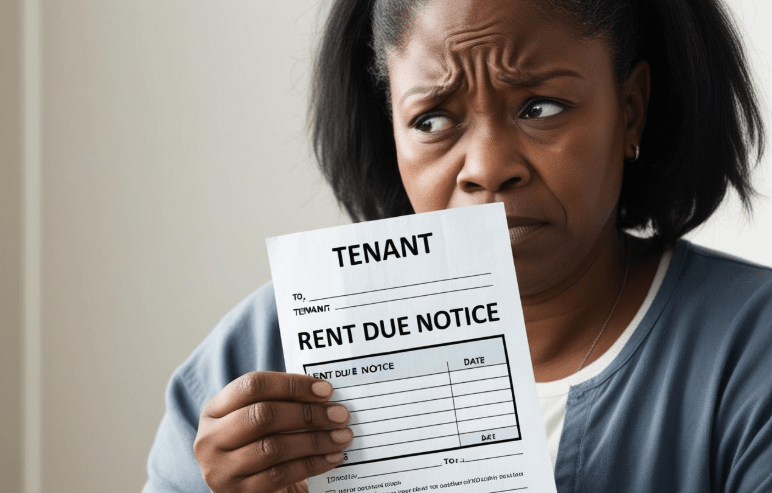
Issue: Can a landlord charge penalties on late rent payments?
Here’s a question from Lindiwe.
I am renting a one bedroom apartment in Pretoria. I’m supposed to pay my rent on the 1st of the month. The lease states that if the rent is not paid by the 1st, I will be charged a late payment penalty of R350 per day for every day the rent remains unpaid.
I read the lease and signed it. I had no intention of not paying rent, so the late payment fees did not bother me. However, this January I experienced some financial difficulties and paid the rent 5 days late in January and 4 days late in February. Now my landlord is chasing me for R3,150, which he says I owe for late payment.
The problem is that the more these penalties pile up, the less I will be able to pay my rent, and then there will be more penalties. It will just keep getting worse. And the worst part is I asked him to spread the R3,150 over my rent instalments and he’s refusing. I am stuck.
From The Legal Desk
Thank you for your question, Lindiwe. I am sorry to hear about your difficulties with your landlord. One of the major concerns for landlords is the risk of tenants failing to pay rent on time or stopping payments altogether. The worry stems from knowing that legal action to recover unpaid rent is a process that can be both expensive and time-consuming. As such, landlords tend to charge late penalty fees to encourage tenants to keep up with payments. But are such penalties legal? Let’s take a look at the legals…
Generally, landlords have several tools at their disposal to help ensure rental payments are made promptly. These include sending letters of demand letters, obtaining acknowledgements of debt, engaging in settlement negotiations, or even going as far as listing tenants for negative credit reports. Of course, there is also the option of going through the courts and chasing the payments through legal action.
What many landlords opt to do, as is the case with your landlord, is charge penalties for late rent payments. However, such penalties are not lawful. Under Regulation 3(3)(a) of the Rental Housing Act’s Unfair Practice Regulations 2008, any clause in a lease agreement that imposes a penalty for late payment of rent is unlawful. This includes administrative charges or any other costs. As a result, any lease clause that includes a late payment penalty cannot be enforced.
The problem with penalty clauses lies in their fixed amounts, which do not reflect the actual financial loss a landlord incurs due to late payments. In other words, that you paid your rent five days late in January or four days late the following month cannot be said to have cost your landlord R350 per day. The law thus emphasises the recovery of actual losses rather than arbitrary penalties. For this reason, landlords can lawfully charge interest on late payments but cannot impose a fixed penalty.
According to Regulation 42 of the National Credit Act (NCA),1 the maximum allowable interest rate for lease agreements is 2% per month, up to a maximum of 24% annually. This means that if rent is not paid by the agreed due date, the first of the month in your case, your landlord can charge 2% interest on the outstanding balance starting the day after the due date.
Since the 2% interest is applied to the full month, there is no need to calculate it on a daily basis if, like you, the tenant pays later in the month. The full 2% interest will still apply for any payments made after the due date. Therefore, when you paid your rent five days late in January, the landlord was only lawfully allowed to charge you 2% of your monthly rent. You have not stated how much your rent is, so for the purposes of this response, I will assume your rent is R7,000 a month. This means, in January, the maximum your landlord could lawfully charge you in interest was R140. Likewise, for February, the maximum was also R140 (2% of R7,000).
Note, however, that the interest is compounded monthly. This means that if your rent had remained unpaid in both January and February, the interest would have been calculated on the total outstanding balance for both months, i.e., (2% x 7,000 = R140) for January and (2% x R14,000 = R280) for February. The total would thus be R420. Such interest charges are the only legally allowed charge for late rent payments. Any lease clause stating that a tenant will be charged, say, R350 per day for each day rent remains unpaid would be considered unlawful under Regulation 42 of the NCA.
Although late payments can be frustrating for landlords, it is crucial to stay within the boundaries set by the Rental Housing Regulations. Thus, you should probably remind your landlord that he cannot legally charge arbitrary penalties or include such clauses in your lease agreement. Instead, he should consider adding an interest clause to his lease agreements. This approach will ensure compliance with the law while offering a legitimate way to recover financial losses due to delayed payments. All the best.
Written by Theo Tembo
Read more from The Legal Desk:
- Do not get caught in the balloon payment trap when purchasing a vehicle
- Can the school remove your child from school over unpaid fees?
- 34 of 2005. ↩︎






 The Legal Desk
Leave a comment