
In a tale to rival any Days of Our Lives script, the Northern Cape High Court in Kimberley recently ruled on a marital muddle involving lobola disputes, a sheep with a starring role, and a very reluctant groom. The case centred on a couple’s divorce battle, where the husband opposed the divorce on the basis that no marital relationship existed between the parties. He alleged that the lobola negotiations, which were to take place on 17 April 2010, had been postponed, as a result of which no marriage had been negotiated or entered into.
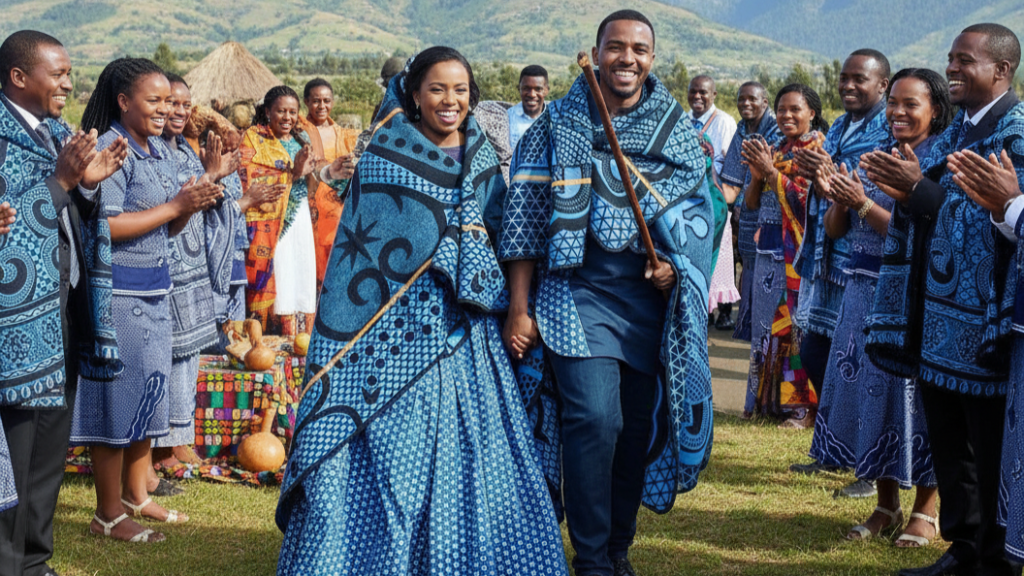
The couple’s story began in 2004 when she was in Grade 11 and he was a tenant at her mother’s house (how very telenovela). Years later, he proposed, and wedding preparations began. In December 2009, she travelled to Lesotho to meet his family, where a ceremony was held in her honour. A sheep was slaughtered, and she was given its rib to eat before being dressed in a traditional Shweshwe, an outfit she was told was for brides. As is tradition in that part of the world, the husband’s father gave her a “new” name, which indicated that she was welcomed into the family. In support of her assertions, she submitted photographs of herself dressed in Shweshwe at the ceremony.
A witness for the wife confirmed that in April 2010, he was part of the lobola negotiations. The groom’s family was charged twelve cows (at R1,000 per cow) and paid R5,000, with the balance to be settled later. The agreement was put in writing in the form of a lobola letter, signed, and a small celebration followed.
The husband, however, had a different take. He admitted to introducing her to his family but insisted there was no proposal. He argued that the ceremony was merely a welcome and that the R5,000 was a payment for a cleansing ritual, not lobola. He even claimed the lobola letter was forged, an argument his father supported (as any good father would, I suppose).
However, Judge Williams was not convinced by the groom’s creative rewriting of his telenovela script. She found it improbable that the wife would be taken to Lesotho, dressed in Shweshwe, have a sheep slaughtered for and fed to her, and be the centre of welcoming celebrations merely because she was being introduced as a person whose studies the husband was paying for. She furthermore found the wife’s account more probable, ruling that a valid customary marriage had indeed taken place. The judge held that the wife and her witness withstood tough cross-examinations and thus concluded that the lobola negotiations had, in fact, occurred in April 2010.
So, despite the husband’s last-ditch attempt to wriggle out of the marriage, the court saw through the ruse and upheld their customary marriage.
You can read the full N.V.M v D.S.R judgement here.
Written by Theo Tembo
Read more from The Legal Desk:






 The Legal Desk
Leave a comment