
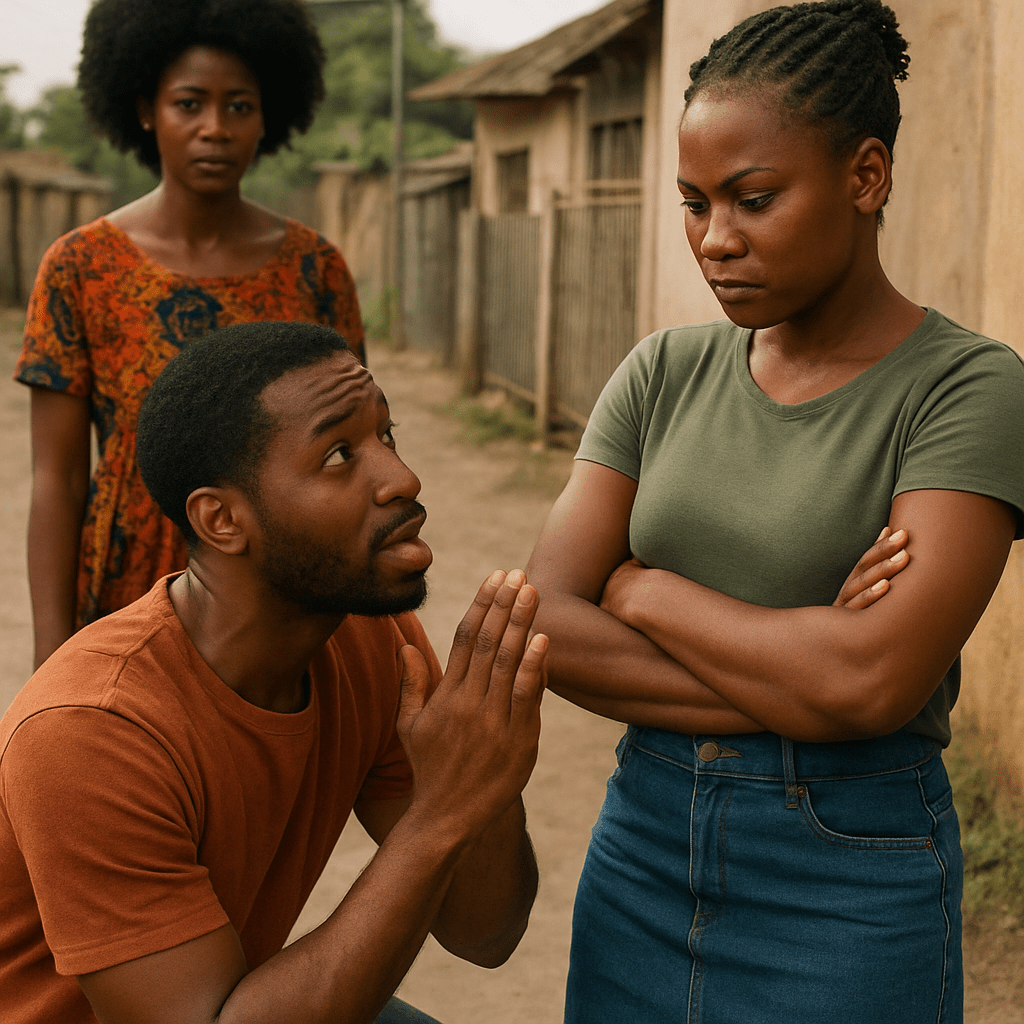
So you’ve found another ‘apple of your eye’ and want to marry her. Do you need your current wife’s consent?
Polygamy remains prohibited in many parts of the world. The United Nations Human Rights Committee has asserted that polygamy violates the dignity of women and has called for its definitive abolition wherever it continues to exist.1 While polygamy is outlawed in many regions, it is notably widespread in Africa, particularly within a region commonly referred to as the “polygamy belt,” which stretches from Senegal to Tanzania. In this area, polygamy is prevalent, with more than one-third of married women living in polygamous unions.2 This includes Burkina Faso (36%), Mali (34%), and Nigeria (28%). In sub-Saharan Africa, approximately 11% of the population participates in polygamous marriages.3
In South Africa, polygamy has a long-standing history within various indigenous cultures. Both men from middle and low socio-economic backgrounds practice contemporary polygamy.4 Among the indigenous Bantu peoples, the practice is widespread, and the nature of polygamous marriages in South Africa can vary significantly depending on region, specific cultural group, and individual belief systems, even within the same community.
From a legal perspective, polygamy is recognised under South African customary law, although it is not acknowledged under the Marriage Act.5 As a result, polygamous marriages conducted according to customary law are considered valid but are not formally registered as civil marriages with the Department of Home Affairs. These marriages fall under the jurisdiction of the Recognition of Customary Marriages Act (RCMA),6 which seeks to protect the rights of all parties involved, with a particular emphasis on safeguarding the rights of women.
This leads to an important question: can a man marry a second wife unilaterally? In other words, can a man simply fall in love with another woman and marry her without first seeking the consent of his existing wife? This issue was examined in the case of Mayelane v Ngwenyama.7
The case of Mayelane v Ngwenyama involved a dispute over the validity of customary marriages following the death of the husband, Mr Hlengani Moyana. The applicant, Ms Mayelane, contended that she had concluded a valid customary marriage with Mr Moyana on 1 January 1984. The respondent, Ms Ngwenyama, claimed that she had married Mr Moyana on 26 January 2008. Mr Moyana passed away on 28 February 2009. Subsequently, both women sought the registration of their respective marriages under the RCMA, each disputing the validity of the other’s union.
Ms Mayelane sought a High Court order declaring her marriage valid and the subsequent marriage of Mr Moyana to Ms Ngwenyama invalid. She argued that Xitsonga customary law required her consent for the second marriage to be valid. Furthermore, she argued that section 7(6) of the RCMA, which mandates court approval for a property contract before entering into a subsequent marriage, had been violated.
The High Court ruled in her favour, declaring her marriage valid and invalidating the second marriage. Ms Ngwenyama appealed this decision to the Supreme Court of Appeal (SCA), which upheld the validity of Ms Mayelane’s marriage but overturned the invalidity of Ms Ngwenyama’s marriage. The SCA found that section 7(6) of the RCMA only addressed property consequences, not the validity of marriages, which was instead governed by section 3 of the RCMA.8
Ms Mayelane then appealed to the Constitutional Court (CC), which ultimately invalidated Ms Ngwenyama’s marriage, albeit on different grounds than the High Court. The Constitutional Court concurred with the SCA’s view that section 7(6) of the RCMA pertains only to property matters. However, the Court focused on section 3(1)(b), which stipulates that a marriage must comply with customary law to be valid.
In interpreting and developing Xitsonga customary law in accordance with constitutional principles, the Constitutional Court concluded that the failure to obtain the first wife’s consent violated her constitutional rights to dignity and equality. The court found that, even before the law’s development, Xitsonga customary law required the first wife to be informed of any subsequent marriage for it to be valid. Accordingly, the court ruled that, in order to align with constitutional values, the law should explicitly require the first wife’s consent for the validity of subsequent marriages. Since Ms Mayelane had not been informed of the second marriage, the Constitutional Court declared it invalid under the law as it stood at that time.
The judgment in Mayelane v Ngwenyama clarifies that, under Xitsonga customary law, a man cannot marry a second wife without the consent of his first wife. This ruling applies to marriages concluded after 30 May 2013. If the first wife’s consent is not obtained, any subsequent marriage is invalid.
It is important to note that this ruling pertains specifically to Xitsonga customary law. However, given the Constitutional Court’s focus on ensuring that cultural practices align with the Constitution’s protections of dignity and equality, it is reasonable to assume that the same principles would apply in other cultural contexts. The key requirement is that cultural practices must comply with the Bill of Rights. Therefore, should one wish to take a second, third, or fourth wife, it is crucial to seek the consent of the existing wives in accordance with the legal and constitutional framework.
For a more in-depth discussion of the Mayelane v Ngwenyama judgment, please refer to the full case analysis here.
Written by Theo Tembo
citation: Tembo, T. “Can a Man Marry Another Woman Without his Wife’s Consent?” (04 Jan 2026). The Legal Desk. Available at: https://wp.me/pfvcwT-mi
Read more articles from The Legal Desk:
- Comment, G., 2000, 28: Equality of Rights Between Men and Women, Article 3, Human Rights Committee. ↩︎
- Jacoby, H.G., 1995. “The Economics of Polygyny in Sub-Saharan Africa: Female Productivity and Demand for Wives in Côte d’Ivoire,” Journal of Political Economy, 103(5), pp. 938-971. ↩︎
- Kramer, S., 2020. “Polygamy’s Rare and Mostly Confined to Few Regions Around the World”. ↩︎
- Baloyi, E.M., 2013. “Critical Reflections on Polygamy in the African Christian Context,” Missionalia, 41(2), 164-181. ↩︎
- 25 of 1961. ↩︎
- 120 of 1998. ↩︎
- 2013 (4) SA 415 (CC). ↩︎
- Section 7(6) of the RCMA deals with proprietary matters and is distinct from the consent requirement, which are found in section 3. While non-compliance with section 7(6) does not invalidate the subsequent marriages, it would mean that such a marriage would be out of community of property. ↩︎






 The Legal Desk
Leave a comment