
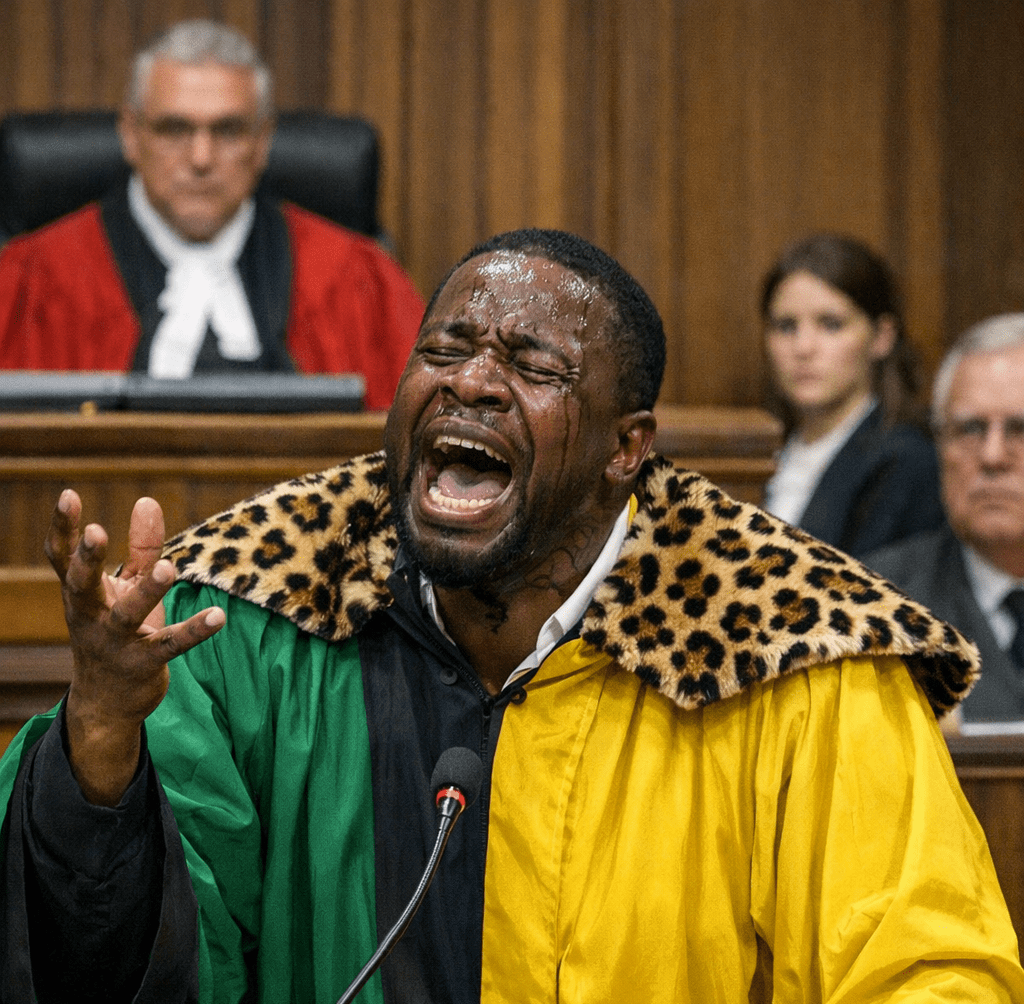
A former Transnet employee who spent years waging a social media war against the state-owned company appeared in the KwaZulu-Natal High Court in a robe of green, yellow, and leopard print, and left with a final warning ringing in his ears.
Musa Mbundwini, a welder dismissed by Transnet Engineering in February 2018 for dishonesty and fraud, appeared before the Durban High Court on 12 and 17 February 2026, facing the prospect of a 30-day prison sentence for defying multiple court orders requiring him to remove defamatory videos from TikTok and Facebook.
Mbundwini had contested his dismissal through two separate arbitration hearings, both of which found that his dismissal had been fair, and a referral to the Labour Court. Having exhausted his legal options, he turned to social media and posted a stream of videos in which he accused Transnet of fraud, dishonesty, and the use of falsified documents. The company only became aware of the videos in March 2024, by which point they had multiplied considerably.
What followed was a procession of court orders each requiring Mbundwini to remove the videos and stop posting further content. The orders were granted in August 2024, April 2025, June 2025, and August 2025 respectively, and were all ignored. By the time the matter returned to court in February 2026, Mbundwini had posted an additional 62 videos since the most recent order suspending his prison sentence.
The hearing on 12 February descended into scenes that Justice Mossop described as unlike anything he had witnessed in 40 years at the bar and on the bench. Mbundwini arrived dressed in a floor-length robe split between green and yellow, with leopard print at the shoulders. He proceeded to shout, scream, weep, and allege fraud against the Transnet’s legal representatives, the court, and practically every institution he had contacted over the preceding eight years. This included Legal Aid, the South African Police Service, and the UMkhonto weSizwe political party, none of which had offered him assistance. Court security personnel were called from elsewhere in the building to assist. At one point, Mbundwini shouted that God was on his side and would ensure his ultimate victory.
Justice Mossop adjourned the hearing and granted Mbundwini a final opportunity to delete the offending videos by the evening of 15 February. Over that same weekend, Mbundwini posted three more videos to TikTok. To be fair to him, the last thing he had shouted leaving court was that he intended to do exactly that.
When the matter resumed on 17 February, further videos were found still present on both platforms. They were deleted in court, under supervision, bar four videos on Facebook, which were ordered removed before the parties left the building that afternoon.
Despite finding Mbundwini clearly in breach of his suspended sentence, Justice Mossop declined to send him to prison, reasoning that the harm to Transnet had been substantially remedied by the deletions and that a further suspension might yet serve a deterrent purpose. He was ordered to pay costs on scale B.
The judge’s parting words carried an unmistakable finality. Mbundwini’s prospects of ever returning to Transnet’s employ were, he observed, now beyond any doubt extinguished. “The moment has come,” Justice Mossop wrote, “for the respondent to take a reality check.”
You can read the full Transnet v Mbundwini judgement here.
Written by Theo Tembo
Read more from The Legal Desk:






 The Legal Desk
Leave a comment