
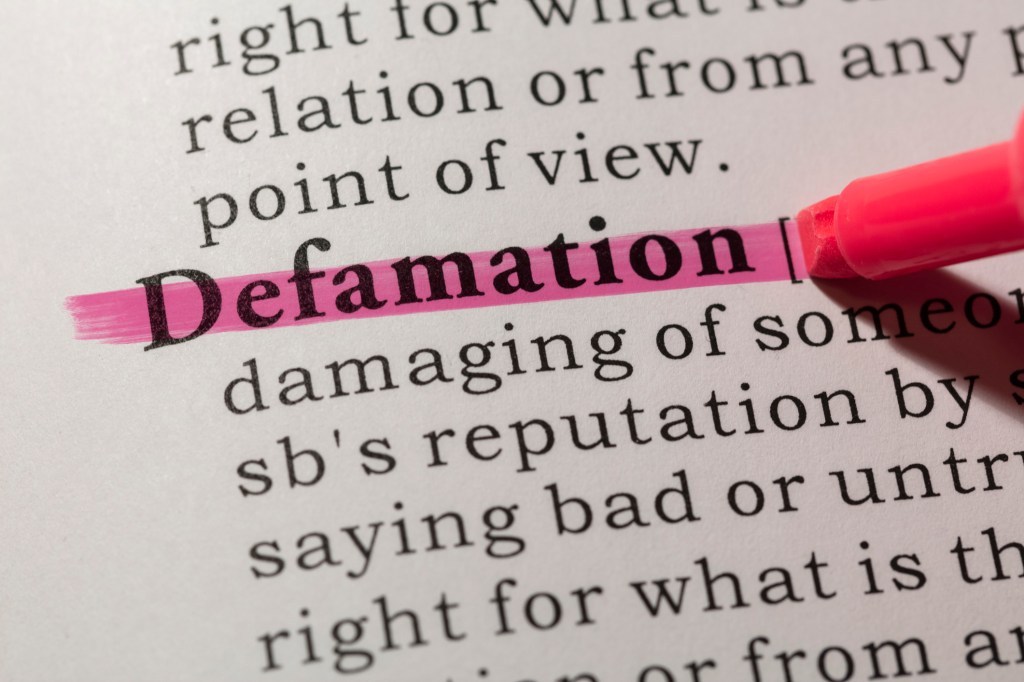
Balancing reputation and free speech in the law on Defamation
I recently encountered an intriguing discussion on social media. The debate was about a young woman who had been assaulted by her neighbour, who accused her of having an affair with the neighbour’s husband. The assaulted woman had posted on social media that she had opened a case of assault. In response, one user suggested, “You should sue her for defamation,” which prompted a further exchange. Another user argued that no defamation occurred simply from alleging that someone had slept with one’s spouse. While the debate became somewhat convoluted, it presents an opportunity to explore the concept of defamation in terms of the law.
What is Defamation?
Defamation occurs when the defendant publishes a statement that damages the plaintiff’s reputation or has the potential to do so. Courts have consistently emphasised the importance of reputation and the constitutional right to dignity under section 10 of the Constitution of the Republic of South Africa (“the Constitution”). However, these protections are tempered by the right to freedom of expression.1
In National Media Ltd v Bogoshi,2 the court articulated a robust understanding of defamation, affirming that the publication must be wrongful and intended to harm reputation. The case underscored the importance of balancing reputational harm with the broader public interest in free speech.
The Elements of Defamation
- Defamatory statement about the plaintiff
A statement is defamatory if it tends to lower the plaintiff’s reputation in the eyes of reasonable members of society. The test is objective and rooted in the boni mores of the community. In Le Roux v Dey,3 the Constitutional Court emphasised that the context in which a statement is made is crucial in determining whether it is defamatory. The court noted that a statement may be defamatory even if it is not overtly damaging but carries an innuendo that harms reputation. The statement must clearly refer to the plaintiff, either directly or indirectly. In cases of indirect reference, the plaintiff must prove that reasonable readers would understand the statement to refer to them. This requirement ensures that liability for defamation is not imposed without a clear connection to the plaintiff. - Animus Iniuriandi
In defamation law, fault is captured by the concept of animus iniuriandi, which refers to the intent to defame or harm someone’s reputation. This intent includes a direction of will and consciousness of wrongfulness. Without these elements, the defendant cannot be held liable. - Publication
Publication occurs when the statement is communicated to at least one person other than the plaintiff. The medium of publication (whether written, spoken, or electronic) does not alter the requirement. With the rise of social media, courts have grappled with the implications of instantaneous and widespread publication, underscoring the need for careful scrutiny of the platform and audience. Once the plaintiff establishes that the statement is defamatory, wrongfulness is presumed. This presumption shifts the burden to the defendant to prove a ground of justification. Wrongfulness is assessed in light of the boni mores and constitutional norms.
Grounds of Justification
Defendants can rebut the presumption of wrongfulness by proving a recognised justification. The law recognises several grounds, reflecting a nuanced approach to balancing rights. Some of these grounds of justification include the following:
The defence of truth and public interest allows the defendant to avoid liability if the defamatory statement is substantially true and serves the public interest. The “sting” of the allegation must be accurate, even if minor details are incorrect. In Le Roux, the court highlighted that truth alone is insufficient. The statement must also align with the public interest as determined by constitutional values.
Privilege grants immunity to defamatory statements made in specific contexts. Absolute privilege applies to statements made during parliamentary debates or judicial proceedings, as provided under the Constitution. Relative privilege, on the other hand, is conditional and applies where there is a duty or interest in making the statement. This form of privilege can be defeated by malice or improper motive.
The defence of fair comment protects honest opinions based on substantially true facts that are in the public interest. The defence does not require the comment to be balanced or unbiased but must be made bona fide. Courts have recognised that fair comment fosters robust public discourse while protecting individuals from unjustified attacks.
Media privilege, developed in Bogoshi, protects the publication of false, defamatory statements if the publication was reasonable. The test for reasonableness includes the sources’ reliability, the matter’s urgency, and the public interest involved. This defence underscores the media’s role in promoting accountability while maintaining journalistic standards.
An emerging ground of justification, reasonable suspicion of shoplifting, was recognised in Pieterse v Clicks Group Ltd.4 The court held that even if a suspicion is reasonable, the manner in which it is acted upon must also be reasonable. This defence reflects the need to balance property rights with individual dignity.
Defences to Animus Iniuriandi
A bona fide mistake regarding the unlawfulness of one’s actions excludes animus iniuriandi. In Hassen v Post Newspapers (Pty) Ltd,5 the court held that even an unreasonable mistake could negate intent. However, this principle has been inconsistently applied, raising questions about the intersection of intent and negligence.
Statements made in jest may also exclude intent, provided the defendant did not intend to harm the plaintiff’s reputation. The courts apply an objective test, considering whether a reasonable person would perceive the statement as a joke. In Le Roux, the court noted that humour must not cross the line into ridicule or belittlement, reflecting the need to protect dignity even in jest.
Conclusion
Returning to the initial social media debate: is it defamation if your neighbour alleges that you slept with her husband? The answer is not straightforward. It depends on various factors. To meet the element of publication, the statement must be communicated to at least one person other than the plaintiff. Additionally, the statement must harm or potentially harm the plaintiff’s reputation in an objectively unreasonable way. The neighbour must also have the intention to defame, or animus iniuriandi, when making the statement. The court will further assess any grounds for justification, including whether the statement was made in jest or based on an honest mistake. Each case must be considered in its full context, and the legal outcome will depend on the specific circumstances surrounding the statement and its publication.
Written by Theo Tembo
Read more from The Legal Desk:






 The Legal Desk
Leave a comment