
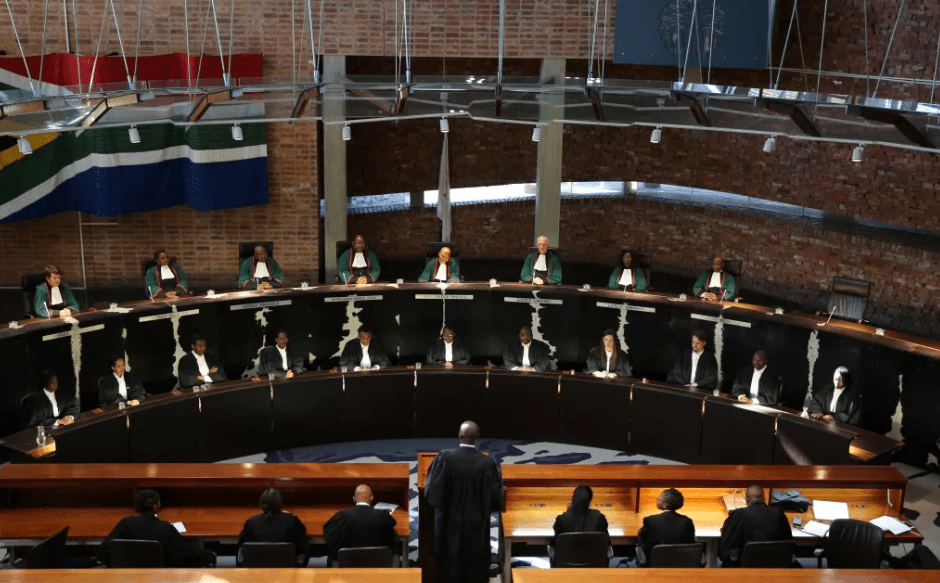
Kapa v S (CCT 292/21) [2023] ZACC 1
Facts
On 21 August 2016, Mr Makhuze Bungane (the deceased) was fetched from his grandmother’s home in Khayelitsha by community members who suspected him of having stolen property belonging to the applicant, Mr Makhi Kapa (“Kapa”). What followed was an apparent act of mob justice, which serves as a chilling illustration of vigilantism in a township where the state’s protective reach was demonstrably inadequate.
The deceased and others were taken to the Kapa’s house where a violent and sustained group assault occurred. Multiple victims were bound with rope, beaten with golf clubs, hockey sticks, sjamboks, planks, bottles and a chisel. The deceased was later carried back to his grandmother’s house by one of the accused, Mr Masonwabe Makoma (accused 4). He was examined by paramedics and certified dead that same day. A post-mortem confirmed that death was caused by extensive blunt-force injury to the head and body.
Kapa, along with six co-accused, was charged in the High Court (Western Cape Division) with four counts of kidnapping, two counts of murder, two counts of assault with intent to do grievous bodily harm, and one count of attempted murder. He pleaded not guilty and exercised his right to remain silent throughout the proceedings. He offered no explanation under section 115 of the Criminal Procedure Act.1
A key witness, Ms Bomikazi Dasi (“Ms Dasi”), who was present during the assaults and was allegedly assaulted at the scene, gave a statement to Sergeant Msolo two days after the incident. She identified multiple assailants by name and described in detail who did what to whom. Crucially, she implicated the Kapa directly, and stated that he pulled the deceased into another room and struck him with a golf stick. Tragically, Ms Dasi died before the trial commenced and was therefore unable to testify in person.
Other corroborating evidence included DNA analysis. The analysis confirmed that the blood of both deceased persons was found inside Kapa’s home. There was also forensic blood spatter evidence which showed that the blood had been cleaned up. The post mortem report detailed tramline bruising consistent with blows from rod like objects. The court also heard the testimony of Ms Aida Bungane (the deceased’s grandmother) and Sergeant Msolo.
The High Court admitted Ms Dasi’s statement as hearsay evidence under section 3(1)(c) of the Law of Evidence Amendment Act (Hearsay Act)2 and convicted Kapa of the murder of the deceased. He was sentenced to 15 years’ imprisonment. His applications for leave to appeal were dismissed by both the High Court and the Supreme Court of Appeal. He then petitioned the Constitutional Court (“Con Court”).
Legal Issues
The core legal questions the Con Court was asked to decide were:
- Whether the High Court correctly applied section 3(1)(c) of the Law of Evidence Amendment Act to admit Ms Dasi’s statement in the “interests of justice”.
- Whether the admission of this untested hearsay evidence violated Kapa’s right to a fair trial under section 35(3) of the Constitution, specifically the right to challenge evidence through cross-examination.
- Whether the application for leave to appeal against both conviction and sentence should be granted.
Arguments Presented
Kapa argued that the High Court erred in admitting Ms Dasi’s hearsay statement, which he claimed fatally compromised his right to a fair trial. He contended that the statement was the sole evidence linking him to the crime, and without it, the State could not prove guilt beyond a reasonable doubt. Its probative value was low, highly prejudicial, and inherently partial, as Ms Dasi was both a victim and the deceased’s girlfriend.
Critical reliability factors such as her lighting, proximity, ability to identify 12 assailants in a chaotic scene, prior knowledge of the accused, and contradictions in Sergeant Msolo’s evidence could not be tested through cross-examination. A “language issue” arose because Ms Dasi spoke isiXhosa while the statement was recorded in English without a qualified interpreter. Furthermore, the High Court improperly treated her oral indication of the accused’s homes as corroboration, without a proper application under section 3(1)(c). Regarding sentence, the applicant argued the court overemphasised the seriousness of the crime and failed to consider his personal circumstances in accordance with the Zinn triad.
The State defended the conviction and asserted the statement was admissible under s 3(1)(c) of the Hearsay Act. Its probative value was high, based on first-hand eyewitness experience of a violent event. Independent evidence corroborated it i.e., DNA placing the deceased in Kapa’s home, post-mortem injuries consistent with Ms Dasi’s account, blood spatter, timing from Mr Makoma’s statement, and Ms Bungane’s testimony. Her personal interest did not automatically undermine reliability. Taken two days after the events, with her confirmation in isiXhosa, the statement offered reasonable accuracy. Kapa’s failure to testify left compelling unchallenged evidence standing, which further supported the conviction.
The Court’s Ruling
The Con Court granted condonation for the late filing and leave to appeal against the conviction but dismissed the appeal. Leave to appeal against the sentence was refused because it did not raise a constitutional issue or an arguable point of law. The court affirmed that hearsay is admissible if it is in the interests of justice. This requires a holistic weighing of seven factors: the nature of proceedings, the nature of evidence, purpose, probative value, reason for unavailability, prejudice, and any other relevant factor.
The majority held that the Bill of Rights does not guarantee an absolute entitlement to cross-examine all evidence. Instead, it guarantees the right to “challenge evidence,” which, in the case of hearsay, is satisfied by the right to resist its admission and scrutinise its probative value. The majority found that the statement had high probative value due to the corroboration by forensic evidence and the specific context of the identification, which outweighed the procedural prejudice of being unable to cross-examine the deceased witness.
The “split” judgment shows an ideological divide within the Court. The Majority (authored by Majiedt J) took a pragmatic approach, and focused on the “interests of justice” in a society plagued by vigilantism. They emphasised that the reliability of the evidence, which was confirmed by DNA and admissions, made its reception necessary to avoid a failure of justice.
Conversely, the Minority (authored by Mbatha AJ) offered a sharp critique, which argued that the High Court paid only “lip service” to the cautionary rule regarding identification by a single witness. The minority’s concern was that, without cross-examination, the court had no way to truly assess the witness’s honesty or the accuracy of her observations under what were likely chaotic circumstances. The minority would have upheld the appeal because it believed the State had not met its burden of proof beyond a reasonable doubt.
Author’s Opinion
I am torn by this judgment. On the one hand, I believe that the Con Court reached the correct outcome. On the other hand, I am not persuaded by its reasoning. In departing from the settled procedural position that properly places the right to cross examination at the centre of a fair trial, the Court has given me pause. I am left wondering whether the outcome was indeed correct
Factually, the case is stark. A young man was abducted from his home, taken to the house of his suspected accuser, bound with rope, and beaten to death over several hours by multiple assailants. The State, despite its duty to investigate thoroughly, produced only one eyewitness who subsequently died, another who disappeared, and a third who recanted on the stand. DNA evidence established that the crime occurred at Kapa’s house, where the deceased’s blood was found. Kapa himself elected to remain silent throughout the proceedings.
On those facts alone, I find it difficult to avoid the conclusion that Kapa was guilty. From that perspective, the majority’s ultimate decision appears correct. I also agree with the majority’s insistence on a holistic assessment of the evidence. The reliability of Ms Dasi’s statement cannot be evaluated by isolating perceived weaknesses. It must be tested against the totality of the evidence. When one considers the forensic findings, the DNA results, the blood spatter analysis, and the post-mortem evidence documenting tramline injuries, the picture that emerges aligns closely with Ms Dasi’s account that a man was beaten to death in the Kapa’s house with rod-like objects by a group of assailants that included the applicant. Her statement describes the Kapa’s active participation in detail. This was not vague or peripheral involvement.
However, the majority overreaches in one important respect. It treats the post-mortem findings, particularly the tramline injuries, as strong corroboration of Ms Dasi’s credibility as an observer. That reasoning is flawed. Ms Dasi accompanied the deceased’s body back to his grandmother’s house and was present when he was certified dead. She plainly had the opportunity to observe his injuries. The argument that she must have been truthful because she accurately described the wounds is therefore significantly weakened. The minority judgement identifies this weakness however the majority does not adequately grapple with it.
It is at this point that my position shifts towards the minority. By upholding a murder conviction based almost entirely on a written statement by a deceased witness, the majority comes uncomfortably close to endorsing what may fairly be described as trial by affidavit. The decision risks signalling to the State that where a witness is unavailable, a carefully drafted police statement which is not translated by a trained interpreter may suffice to secure a life-altering conviction.
The Con Court insists that the right to challenge evidence remains intact, even without cross examination. However that right is necessarily hollow where the source of the accusation is beyond cross-examination. Cross-examination is not a procedural luxury. It is the primary mechanism by which reliability, perception, bias, and internal consistency are tested. In a case that turned decisively on identification and participation, its absence is more that just a minor inconvenience. It is central to the entire outcome.
In the understandable desire to address vigilantism and affirm the rule of law, the Con Court may have allowed the gravity of the underlying crime to soften its approach to evidentiary safeguards. That is precisely where caution is most required because hard cases test commitment to principle. If the admission of decisive hearsay evidence becomes easier in cases of serious crime, the constitutional protection of the right to a fair trial risks erosion.
The result may be correct but the reasoning stretches the “interests of justice” standard close to its limits. The long-term implications of that stretch deserve serious reflection.
You can read the full Kapa v S Constitutional Court judgement here.
Written by Theo Tembo
Read more from The Legal Desk:






 The Legal Desk
Leave a comment