
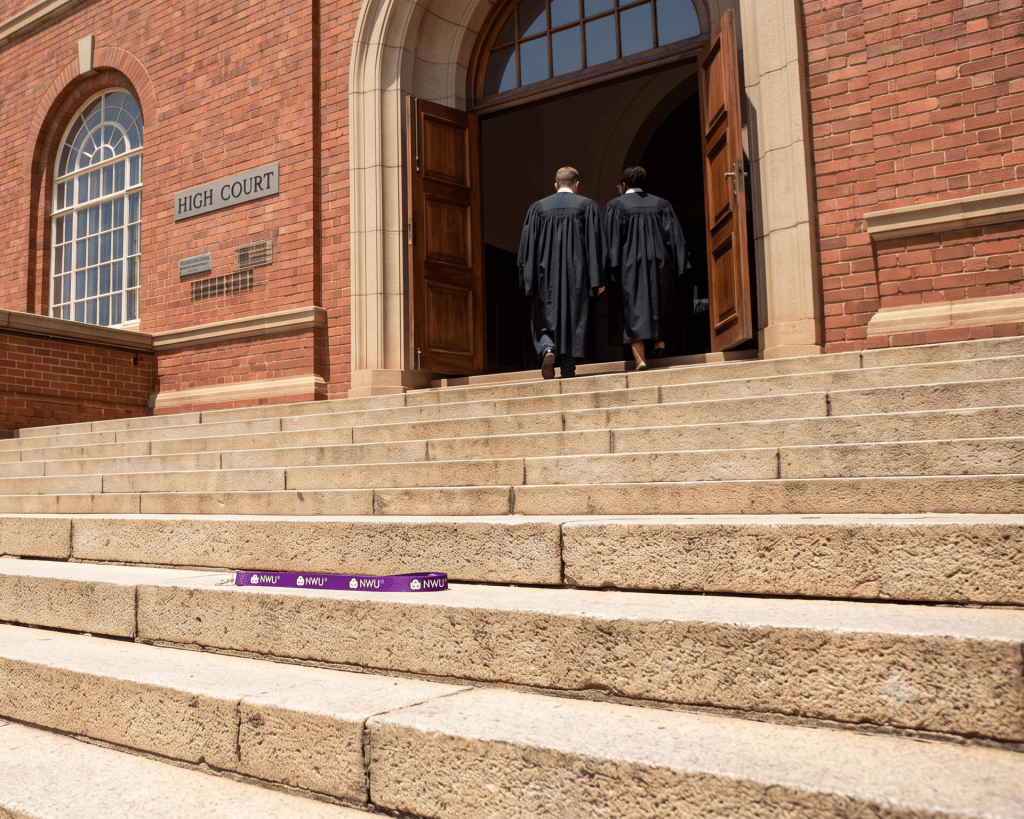
The Labour Court in Johannesburg dismissed an application to overturn a CCMA arbitration award that upheld the dismissal of a former North-West University (NWU) specialist who was absent from work for more than 260 days due to ill-health.
Babele Moletsane, a former Senior Curriculum Specialist at NWU, was dismissed in January 2022 after a series of serious medical conditions affected her ability to work. Over a period of approximately two years, Moletsane suffered from anxiety that required psychiatric hospitalisation, severe arm pain that required surgery, COVID-19 and pneumonia. In total, these conditions resulted in her absence from work for more than 260 days.
After her initial arm surgery, Moletsane returned to work before she had made a full recovery. She subsequently contracted COVID-19 and was later hospitalised with pneumonia. NWU eventually commenced a formal “Step 6 Hearing” process in terms of its Behavioural Manual, which resulted in the termination of her employment.
Moletsane challenged her dismissal at the Commission for Conciliation, Mediation and Arbitration (CCMA). Commissioner Solomon Modipa found that the dismissal was both procedurally and substantively fair.
Moletsane then approached the Labour Court to review and set aside the arbitration award. Her review application was filed 47 days late, which she attributed to the conduct of her former attorney. Acting Judge Ngobeni granted condonation for the delay after finding that Moletsane had provided a reasonable explanation and had also demonstrated financial difficulties. However, the merits of her review application did not succeed.
Before the Labour Court, Moletsane’s legal representative argued that the commissioner had committed a gross irregularity by deciding the matter without oral evidence and without a medical report that confirmed her incapacity. It was also argued that NWU had failed to consider all available alternatives before concluding that Moletsane could no longer perform her duties.
NWU disputed these arguments. Its representative submitted that the parties had agreed to proceed with the CCMA arbitration as a “stated case”. As a result, there were no factual disputes for the commissioner to resolve. The only issue was whether the law required NWU to obtain a medical report before it could dismiss Moletsane.
Acting Judge Ngobeni found compelling evidence that the parties had agreed to proceed by way of a stated case at the CCMA. The court also found that NWU had followed its internal procedures and had properly considered Moletsane’s prolonged absence. Given the extent of her absence, the court found that it was not reasonably possible for the university to provide her with alternative employment.
The court confirmed that an employer cannot be expected to tolerate an employee’s prolonged and indefinite absence indefinitely. The absence of a medical report, in itself, did not render the dismissal unfair. The court concluded that the commissioner’s decision fell within the range of decisions that a reasonable decision-maker could reach. It further held that NWU was not legally required to base the dismissal solely on a medical report.
You can read the full details of the Moletsane matter here.
Written by Theo Tembo
Read more from The Legal Desk:







Leave a Reply